Anton Webern
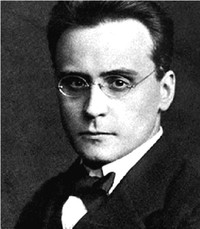
Anton Webern (German: [ˈantoːn ˈveːbɐn] ; 3 December 1883 – 15 September 1945) was an Austrian composer and conductor. His music was among the most radical of its milieu in its concision and use of then novel atonal and twelve-tone techniques in an increasingly rigorous manner, somewhat after the Franco-Flemish School of his studies under Guido Adler. With his mentor Arnold Schoenberg and his colleague Alban Berg, Webern was at the core of those within the broader circle of the Second Viennese School. He was arguably the first and certainly the last of the three to write music in a style lauded for its aphoristic, expressionist potency, reflecting his instincts and the idiosyncrasy of his compositional process.Unhappy in his early career as a peripatetic theater music director, Webern came to some prominence and increasingly high regard as a vocal coach, choirmaster, conductor, and teacher in Red Vienna. With a publication agreement through Emil Hertzka's Universal Edition and Schoenberg away at the Prussian Academy of Arts, Webern wrote music of increasing confidence, independence, and scale from the 1920s onward. He maintained his "path to the new music" while marginalized as a "cultural Bolshevist".
Posthumously Webern's later music was celebrated by a variety of mid-century musicians, especially composers, in a phenomenon known as post-Webernism. Yet historical understanding of his œuvre was fledgling after years of severe disruption in which it was variously neglected or opposed, nor were its sociocultural context, semantics or semiotics, and intended performance practice well appreciated. This situation was gradually remedied by musicians and scholars who helped publish and record his complete works as well as establish them in the standard repertoire.
Similar Artists